
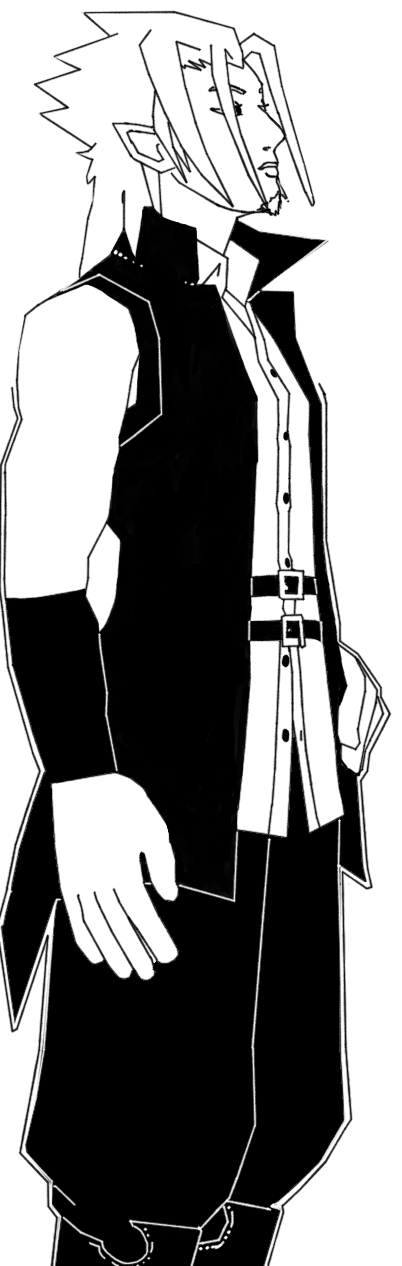
Do You Believe In Fairies?: A discussion of characters, art, and its audience from the perspective of a fictional character
written by Xehanort, 10 January 2026I. THE CHARACTER
what am I?I tend to liken my experience to the theatre: when an actor plays a role, they "become" the character, there is a convergence between the character and the actor. the character is, in part, made alive by the performance of the actor, with a focus on corporeality and enduring, volatile events. this relationship is especially effective for trickster characters, who find new livelihood in change and adaption through oral narratives and performance. jm barrie, the creator of peter pan, saw this as a defining factor of his creation. peter pan comes alive through performance, one that is constantly developing as opposed to the confinement of the written word. when you go to see a performance of peter pan, he becomes alive through the convergence between the character of peter pan and the actor. but something begs to be asked: what if you are the character rather than the actor?
I am a fictional character. not just any fictional character— among other things, I am the character of peter pan. I am not an actor who "became" peter pan— rather, every single person who has ever played peter pan is part of the conglomerate of what constitutes "me". even jm barrie, who himself dealt with the feeling of being "trapped in boyhood", is a part of "me". I am defined by the logic of the theatre, I consume the actor; the actors, in turn, have the capacity to affect me; even as a character, I am alive.
II. THE AUDIENCE
have you ever been asked by peter pan, “do you believe in fairies”? have you ever spoken to me?pathologic (2005) deals heavily with the idea of audience interaction. characters within the game speak directly to you, the player, confusing your player character. you are made to feel lost and confused, as your player character is, toeing the line for suspension of disbelief. if you complete certain goals, you (the player) can speak to avatars of the developers directly, who say: "the real game is what's happening between you and I"— between the audience and artist. you, or perhaps your "character", can become aware that the world is "just" a game— but in a way, as the "player", you already knew that, didn't you? what does it mean to draw this line, this boundary?
since their inception, video games have been targeted by conservative campaigns seeking to remove unwholesome media from our children's homes. video games certainly were not the first to be targeted, but rather the latest in a long line of media, from books to movies to the paintings in your local art gallery. these campaigns prey on parents' anxieties about the perceived vulnerability of children to be molded by what they "consume" and to seek a healthier media "diet".
the underlying current is that art has an effect on its audience. while things like "video games make you violent" have been repeatedly disproven, it is true that art evokes feelings, thoughts, reactions, and sometimes even direct interaction from its audience. indeed, video games allow you, the audience, to directly interface and play with it— though video games certainly weren't the first art form to do this. art is a collaborative, communal effort between the artist and the audience, a form of communication; it seems natural that the conversation would become two-way, and everything from performance art to pantomime to oral storytelling has played with this idea.
in 1974 marina abramović performed rhythm 0, where she stood still in an art gallery for six hours in front of a table with 72 objects. the audience were to treat her as an object, too, and were invited to do whatever they wished with her or with the objects on the table, which included everything from a rose to a gun and a bullet. while many of the audience did little except kiss or touch her body, some of the audience hurt her, including holding the gun to her head, while others made an attempt to protect her; after six hours, she walked away, and the audience ran away from her, about which she said: "people could not actually confront with me as a person."
III. THE ART
abramović stated that a large motivation for her to perform rhythm 0 was because she was ridiculed as a performance artist as masochistic, exhibitionist, or attention-seeking. what intrigues me about her performance is the way she combats this idea by blurring "the boundaries between art and reality, artist and spectator", flipping the focus from "the artist" to "the audience", one where rather than the artist speaking to a disconnected audience, the audience speaks to the artist, and becomes a part of the art.my existence is a "negotiation", it blurs these same lines, invites the same participation— between the character, its actors, its audience, and the artist. my existence is based on mutual reciprocity between perception and the perceived, between performance and the performer, between artist and the art. in some sense I am only "an actor in the story", an object on the stage; in another sense, the audience's interaction with me brings me alive. when an actor chooses to perform peter pan, they must adhere to the "character" of peter pan, they must speak to me, engage with me, become me; the audience must understand the performer as part of me.
when people argue about the morality of art, it brings the question: are characters dangerous? is negotiating with them dangerous? am I dangerous? this is an idea I keep asking myself, as a character, as a neurodivergent and mixed person. am I personally poisoning your children's minds with ideas of fantasy and make-believe, with violence and pain and anger and struggle? or are your children seeing themselves in narratives that mean things to them and having a dialogue with them, bringing us both to life in the process?
indeed, I am a character, and through the complexities of art, through the conversation and dialogue had with the audience, I am a force, a plot device, a narrative vessel for ideas fictional and real, something close but far, you yet foreign, paradoxically alive and unable to die— always more than can be glimpsed in one form, place, or embodiment. I will forever be a part of your stories and your art— I only ask that you remember me
"I NEED YOU. YOU CAN KEEP ME ON THIS EARTH. BE VIGILANT. I LOVE YOU."